Planning Septic Replacement Around an Occupied Home
Replacing a septic system at a home where people still live requires more than choosing where the new components will go. The household needs a workable plan for bathrooms, laundry, deliveries, pets and access while the property is being assessed and, if needed, excavated.
Start with the property location and what you have noticed. You do not need old permits, a recent soil evaluation or finished plans before contacting Couples Construction. Those details can be gathered as the next steps become clear. The useful first goal is to understand the problem and the occupied home's needs, rather than assume the whole system must be replaced.
Separate the assessment from the replacement decision
Slow drains, odors, alarms or wet ground are reasons to seek qualified help. They do not, by themselves, identify which component is responsible or establish that full replacement is necessary. Explain when the concern began, which fixtures are affected and whether it changes after rain or heavy household use. Share any previous service findings without treating them as a new diagnosis.
Assessment may lead to maintenance, a component repair, further investigation or a replacement scope. Ask what has actually been established and what remains uncertain. If sewage backs up into the home, avoid contact and seek prompt professional and local health department guidance. EPA's guidance on septic system malfunctions explains why symptoms need investigation.
Gather useful records, even if the file is incomplete
Existing permits, installation sketches, inspection reports and pumping or repair receipts can help explain what is on the property. A drawing may show an approximate tank or drainfield location; a receipt may identify a previously serviced component. Tell the person reviewing it whether the record describes the current arrangement or an earlier system.
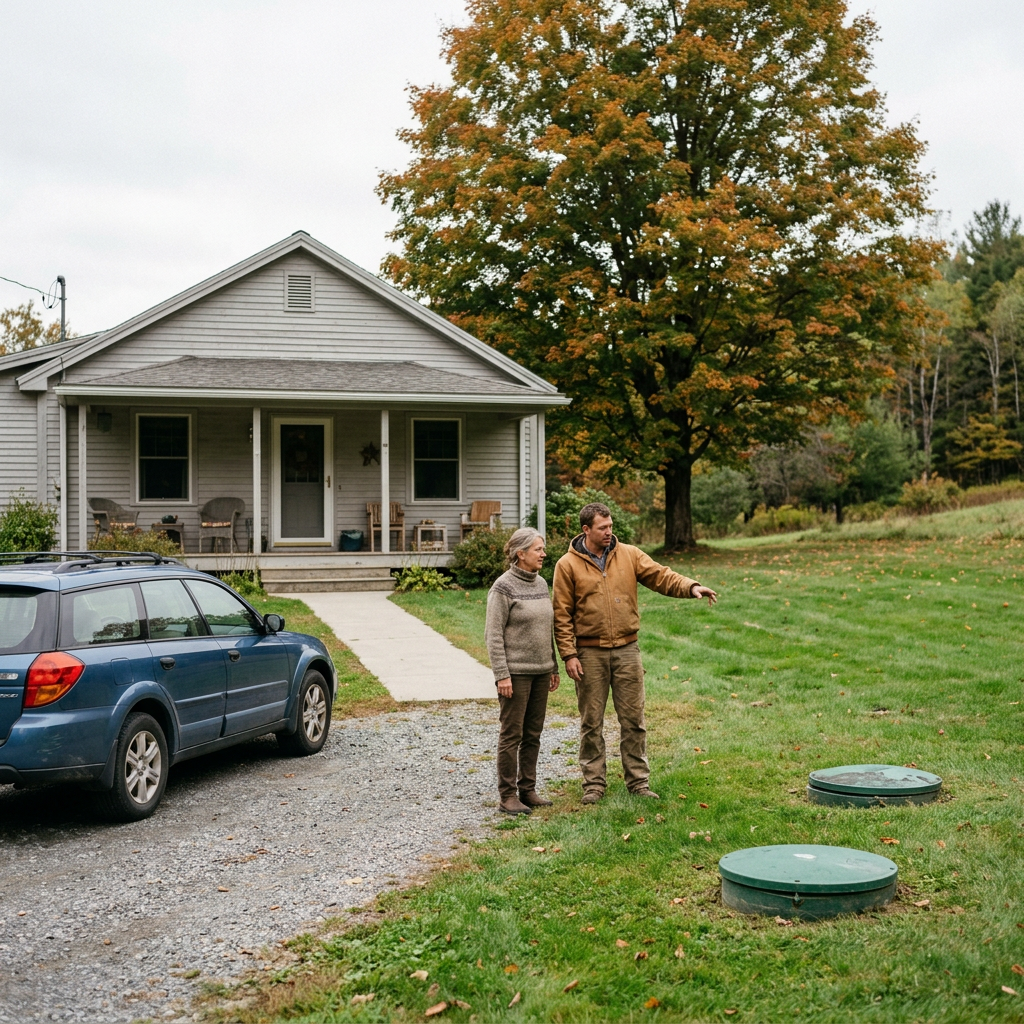
If you cannot find records, say so. Ask whether the local health department or a previous service provider may have information. Note known additions, changes in household use and work near the system. Do not uncover a tank or remove a lid just to supply a photograph. A safe, wide view of the yard and any visible access covers can help the initial conversation.

Confirm approvals before committing to a construction sequence
Kentucky's onsite sewage program is administered through local health departments. Construction, installation or alteration of a regulated system requires the applicable permit before that work begins. A repair that changes system components or layout may be an alteration; confirm the requirements for the actual scope with the responsible authority and installer. An old permit does not establish approval for a new arrangement.
Our Kentucky septic installation guide explains the broader evaluation-to-installation sequence. For an occupied home, use that sequence to identify the decisions needed before scheduling any interruption to service.
Plan household use before disconnecting anything
Ask which part of the work could affect wastewater service, how the household will be notified and who will confirm that normal use can resume. Do not assume every replacement follows the same order or can be finished in a particular number of hours. Weather, discovered conditions, deliveries and inspections can change the sequence.
Make the interruption plan specific
Bathrooms and essential use: Ask whether any fixtures can remain in service and what temporary arrangements are appropriate if they cannot.
Laundry and appliances: Discuss when washing machines, dishwashers and other wastewater-producing equipment must stay off.
Household routines: Identify work-from-home hours, school pickup, necessary deliveries and any access needs that affect the plan.
Communication: Choose one household contact and agree how changes or delays will be communicated before work proceeds.
If continued occupancy is not practical during an interruption, discuss alternatives early. Any temporary wastewater arrangement needs to be appropriate and authorized; do not improvise a discharge into a ditch or yard.
Walk through equipment access and protected areas
Look at the route from the public road to the work area. Gates, tight corners, overhead lines and the available turning space can affect equipment, tank delivery and pumping access. Tell the contractor which driveway or entrance must stay usable and where household vehicles can be moved.
Discuss retained trees, fences, patios, wells, private utility lines and existing septic areas. Marking a preferred equipment route is not the same as confirming it is suitable. Utility locating and any additional private-line locating need coordination before excavation. Establish where barriers will be placed so children, visitors and pets stay out of work areas.
Protecting suitable soil also matters when a replacement treatment area is being considered. Avoid assuming that an open part of the yard is available for trucks, parking or stockpiles. Have the responsible professionals identify the approved work areas and places that need protection before mobilizing.

Put restoration and old-component handling into the scope
The finished system and the finished yard are related but different parts of the proposal. Ask what happens to existing components, who handles any required pumping and how removal or abandonment will be addressed under the applicable requirements. Do not assume the old tank can simply be left untreated or that everything must be removed.
Agree on the disturbed area's finish: backfill, rough grading, topsoil where specified, seeding or other surface work. Ask how access tracks, damaged fencing or a disturbed gravel drive will be handled. Establish whether electrical connections, hauling and restoration are included or assigned to another provider.
A yard may need follow-up attention after disturbed soil settles or vegetation establishes. Ask what follow-up is included and who to contact about it. This is more useful than assuming that a seeded area will immediately look like an undisturbed lawn.
Leave with a clear handoff
Before normal use resumes, confirm that required inspections and authorization have been addressed and ask for operating instructions relevant to the installed system. Keep the approved layout, service information and accessible-component locations with the home records. Discuss how future mowing, landscaping and vehicle access should respect the system.
Talk with Couples Construction about septic replacement at your occupied home. Share the location, the concern and anything that must remain accessible. We review qualifying residential septic installation and replacement inquiries around Harrodsburg, Danville, Lancaster, Stanford and surrounding Central Kentucky communities. Missing records should not stop that first conversation.
Official Kentucky resources
The Kentucky onsite sewage program describes the local health department's role. 902 KAR 10:110 explains permit requirements for construction, installation and alteration. Confirm the requirements for your actual property and proposed work with the responsible authority.
